
Ever since I was a kid (and I’m a senior citizen now) I’ve been interested in shooting pictures of deep space objects. Back in those days (the 60’s and 70’s), shooting astrophotographs meant using film (often specially-treated) and guiding by hand for a half hour or more to get a decent shot. And who knows what went on in the darkroom! In my younger days I really couldn’t afford to lay out the cash for the setup I’d need to shoot like that. As I approached retirement, I found that astrophotography was all digital and computerized. And after almost forty years in engineering, I was able to afford the equipment I’d need to get started.
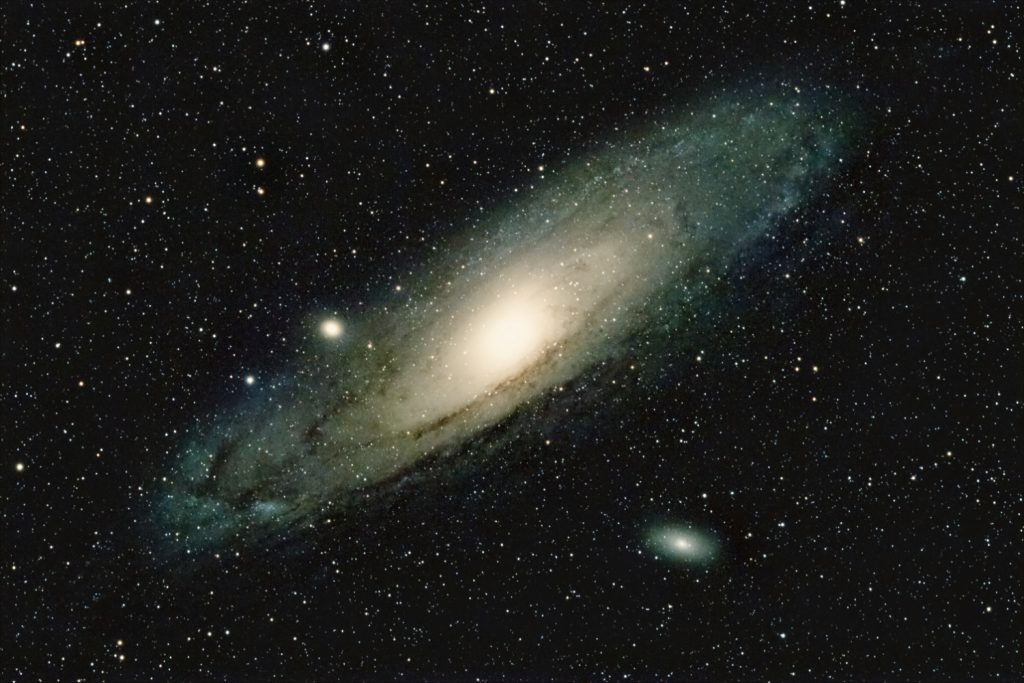
My first astrophotography rig was a Sky-Watcher Esprit 100ED f/5.5 apochromatic refractor coupled with a Canon EOS 250D camera on an iOptron GEM45 mount. I used a software package called BackyardEOS to take the subs. I knew about guiding but it seemed like it would be complicated and I didn’t bother at first. One of my early targets was M31, which I shot in September of 2020. I don’t think I was even guiding yet (not sure about that). I shot ten three-minute exposures but no flat or dark frames, and stacked them in Deep Sky Stacker. Then I processed the master image in Affinity Photo, and the result is what you see below. At the time, I was thrilled with this result. Today, not so much.
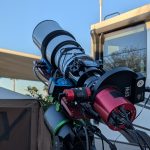
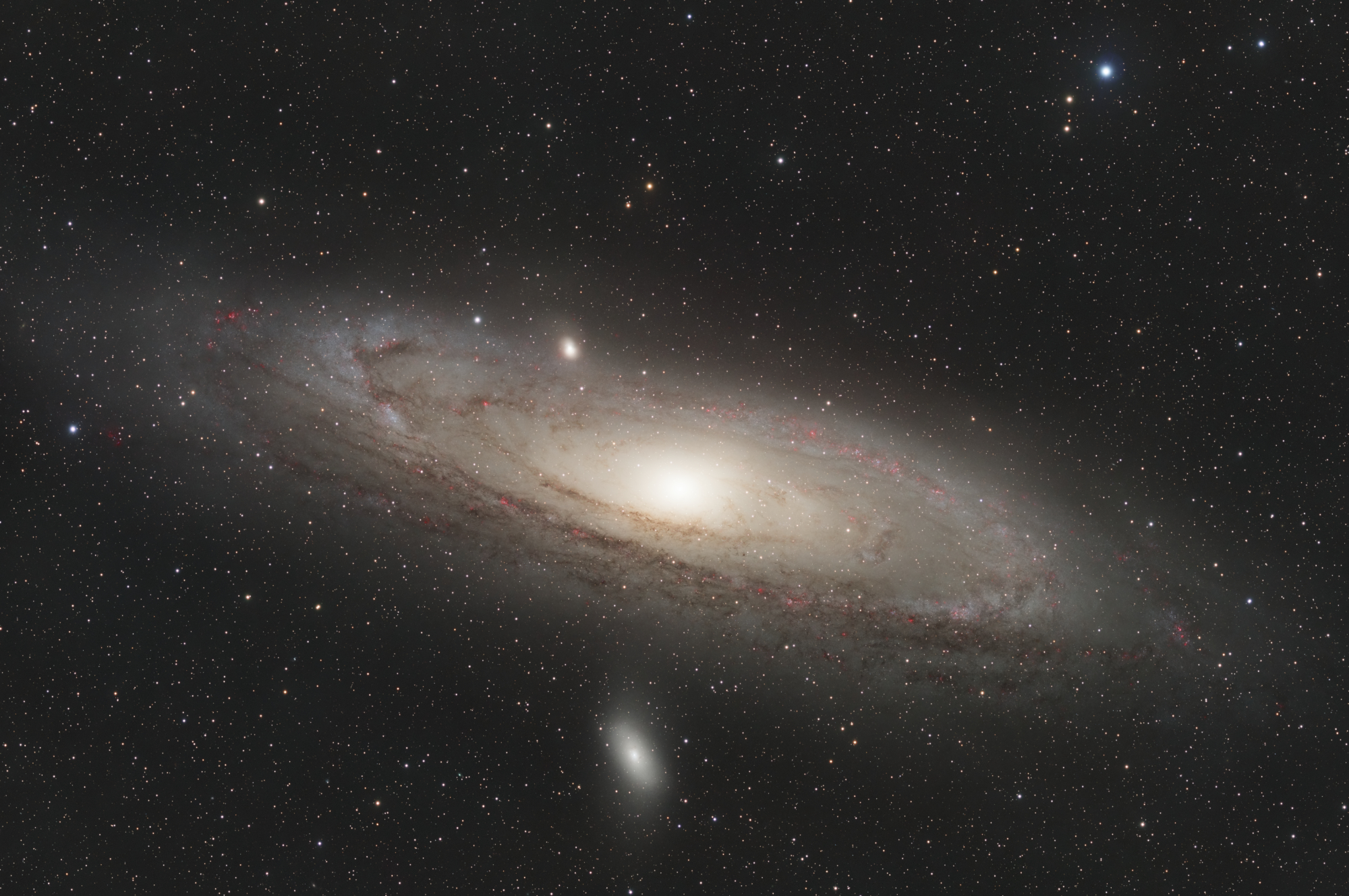
Gradually, my imaging has become more sophisticated–an astro camera, guiding, dithering, filters, plate-solving, longer exposures, more time on target, automation, and better processing techniques (including the adoption of PixInsight). My latest attempt at M31 is the image at the top of this post, shot with a Sky-Watcher Esprit 80ED f/5 apo refractor and a ZWO ASI2600MM Pro mono camera with filters for LRGB and Ha, all on a Sky-Watcher Wave 150i mount. In this case I was using an off-axis guider. Still shooting three-minute subs, but 50 of them in L and 16 each in R, G, B, and Ha (Ha subs were five minutes).
So that’s just a quick summary of my journey to the point where my astrophotographs no longer suck. As I continue with this blog, I’ll write about lessons learned along the way and share new images as I get them. Please comment with your questions or own experiences.